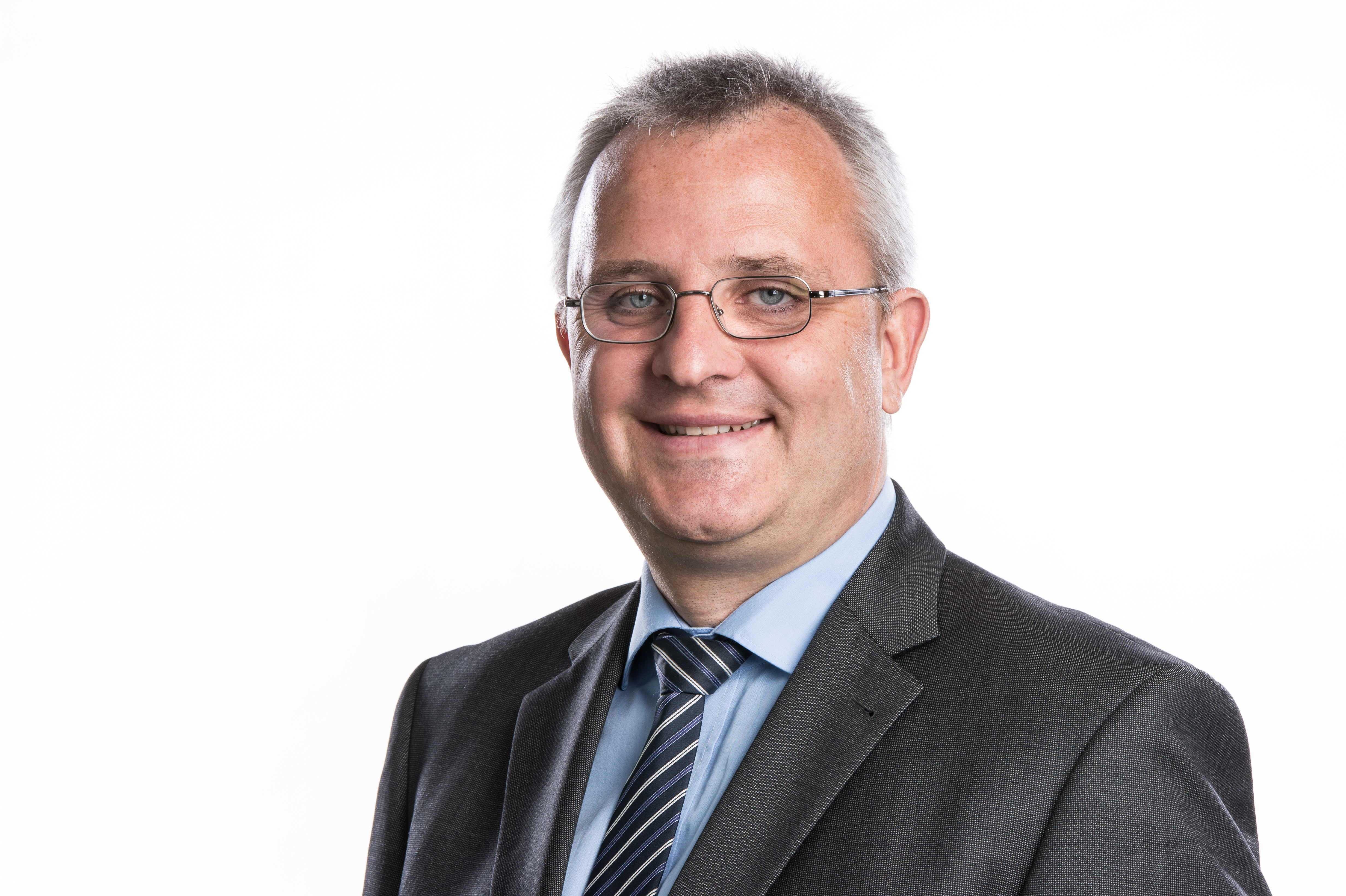
Director of the Institute of Mechanical Systems (IMES), ZHAW School of Engineering
Prof. Dr. Robert Eberlein is a distinguished academic and mechanical engineer specializing in the experimental and numerical modeling of solid polymers, soft tissues, and lightweight structures. Since 2017, he has served as the Director of the Institute of Mechanical Systems (IMES) at the ZHAW Zurich University of Applied Sciences in Winterthur, Switzerland.
Academic Background & Education: Dr. Eberlein earned his Doctorate (Dr.-Ing.) in Numerical Mechanics from the Darmstadt University of Technology with summa cum laude honors. His academic foundation includes a Diploma in Mechanics from the same institution and a period as an exchange student in the Graduate Program in Mechanics at the University of California, Berkeley.
Research Focus & Contributions: His research interests lie at the intersection of material science and computational engineering. Key areas include:
Polymer Science: Fatigue life analysis and damage modeling of rubber-like materials and POM gears.
Biomechanics: Modeling of human soft tissues and the investigation of pericardial patches for medical treatments.
Innovation: Leading projects on "Digital Twins" for mechanical elements and multiscale design for resilient lightweight structures.
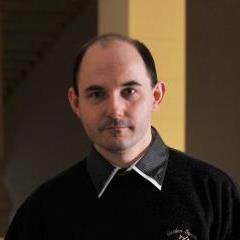
András Lengyel received his first degree in civil engineering from Budapest University of Technology and Economics in 1999 and his PhD degree in engineering sciences from the University of Oxford in 2003. He also holds a habilitation degree at Budapest University of Technology and Economics where he is an Associate Professor since 2012. His research interests include mechanics related numerical modelling in discrete geometry. In the field of biomechanics he has worked on constitutive modelling of soft tissues, arteries and aneurysms. His current research also includes experimental analysis and numerical and constitutive modelling of timber and mechanics of retrofitting with with fibre reinforced polymers.
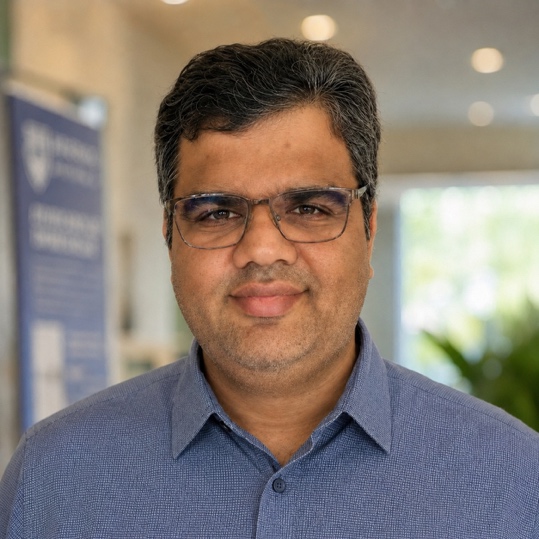
Majid Movahedi Rad is Professor and Vice-Dean of the Faculty of Architecture, Civil Engineering, and Transport Sciences at Széchenyi István University, Hungary. He earned his PhD from the Budapest University of Technology and Economics in 2011 and has been a faculty member at Széchenyi István University since 2012.
He is the founder of the Computational Mechanics Research Group and has authored over 140 scientific papers in reputable international journals. His research focuses on optimization programming, numerical simulations, dynamic analysis of structures, and discrete element modeling. He has been actively involved in organizing and participating in international scientific conferences worldwide, and has been invited as a speaker at numerous international academic events.
Recognized among the world's top 2% of scientists in the Stanford University ranking, he has received several prestigious grants and awards for his outstanding contributions to structural and computational engineering research.
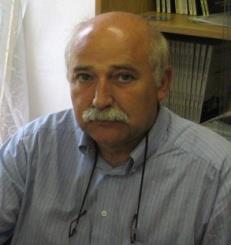
Prof. Eng. Justín Murín, DrSc. is a Professor of Applied Mechanics at the Slovak University of Technology in Bratislava. His scientific research focuses on the development and application of computational methods in continuum mechanics for multiphysical modeling, as well as the simulation of mechanical and mechatronic systems made of functionally graded and multifunctional materials. In his pedagogical work, he teaches Continuum Mechanics, Thermomechanics and Thermodynamics, Elastodynamics, and Finite Element Methods . He was awarded "Professor of the Year" in 2010 and "Scientist of the Year" in 2020 at the Slovak University of Technology in Bratislava. Professor Murín is a member of the Committee of the Central European Association for Computational Mechanics and served as a member of the General Council of the International Association for Computational Mechanics until 2022. He has published over 400 papers and conference contributions. He is currently a Professor Emeritus at the Slovak University of Technology in Bratislava.
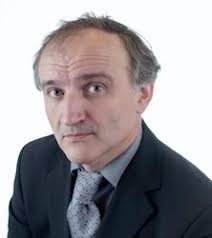
Zdenko Tonković is a Full Professor and Dean of the Faculty of Mechanical Engineering and Naval Architecture at the University of Zagreb. His research interests include computational mechanics, fracture and fatigue mechanics, multiscale modelling of material deformation processes, and welding modelling and simulation. He holds a PhD degree from the University of Zagreb and conducted research at Ruhr University Bochum in Germany. He has authored more than 200 publications in international journals, conference proceedings and book chapters, and co-authored five textbooks. He is the recipient of the Croatian Government Annual Award for Science and the Croatian Academy of Engineering Award for Scientific Achievement in Technical Sciences. Since 2022 he has been a member of the Scientific Board of the Central European Association of Computational Mechanics, serving as Vice-President since 2025, and a member of the General Council of the International Association for Computational Mechanics. He is a member of the Croatian Academy of Engineering and served as President of the Croatian Society of Mechanics from 2018 to 2022. He is also an Associate Editor of the journal Transactions of FAMENA.
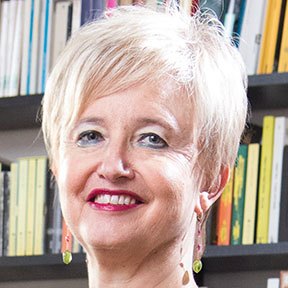
Patrizia Trovalusci, PhD, Full Professor of Solids and Structural Mechanics. Director of the PhD Program in Structural and Geotechnical Engineering and of the School of Civil Engineering and Architecture at Sapienza University of Rome (2019-2025). Rector Delegate for International PhD Programs (2019-2022). Director of the Sapienza research group on Multiscale Modelling of Complex Materials. Her research focuses on microstructure-based approaches, discrete-to-continuum formulations for complex materials, non-classical continua and structural mechanics–architecture interactions. Author of more than 200 articles in International Journals, Volumes, Conference Proceedings; Organizer of several Conferences, Minisymposia, International Advanced Courses on Solid Mechanics and Structures; Guest editor of many Special Issues in international journals. Associate Editor and/or Member of Editorial Boards of International Journals; Member of International Scientific Societies, international Evaluations Committees for researchers’ recruitments; Remote Referee of international commitments for funding assignment (e.g. ERC). Principal Investigator of competitive research projects. President of the Commission of the National Scientific Qualification Association for Professors in the Mechanics of Solids and Structures. Supervisor of several PhD Students, Post Docs, Assistant Professors.
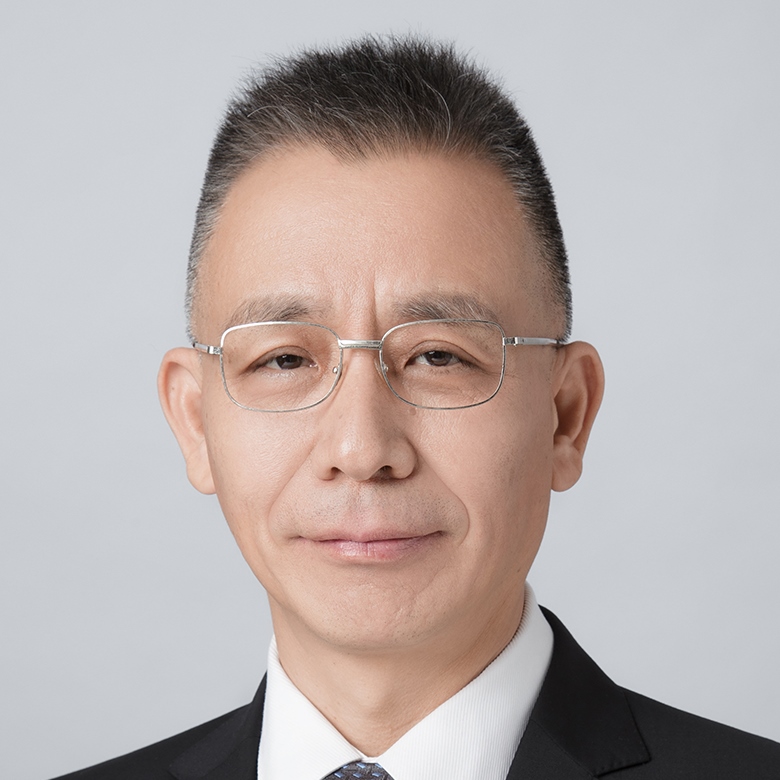
Dr Yuan Yong, full professor of Tongji University since 1996, obtained his first degree from Chongqing University in 1983 and PhD from Tongji University in 1991. Professor Yuan is currently the member of European Academy of Sciences and Arts (EASA), president of Shanghai Science & Technology Development Foundation (SSTDF), board member of Eurasia Pacific Uninet (EPU), director of Sino-Belgium Joint Laboratory of Industrialized Construction (LIC) and Austria-Chinese Research Center on Tunnel and Underground Engineering (ACTUE). He also serves as members of several international academic organizations such as Education and Training Council of International Tunnelling Association (ITA-CET), Performance Committee of federal Internationale de Beton (fib), and others.
Professor Yuan devoted most of his effort on computational approaches, experimental methods, and field practices on civil engineering and renewable energy in the orientation of sustainability. His achievements include serviceability design, state-oriented maintenance, and hazard prevention, of infrastructures. In the view of serviceability of structure from its very beginning to in service, Professor Yuan has contributed a multi-field computational model of concrete structure at early-age till its evolution with time. Furthermore, theory of state-oriented maintenance was initiated for the decision-making of maintenance infrastructures in operation. The successful applications were contributed to the construction of Shanghai Tower, Hongqiao Transportation Hubs, large facilities during EXPO 2010, and many others. His team developed experimental principle of shaking-table array to simulate propagation of strong earthquake, and then accomplished non-uniform response tests of long-tunnel such as immersed tunnel of Hongkong-Zhuhai-Macau (HZM) linkage, the Yangtze River Tunnel, and the others not only limited to underwater tunnels but Highway Tunnels, GIL ultra-high voltage power transmission tunnels, and water conveyance tunnels. Furthermore, he contributed to the design guidelines of earthquake engineering. He was awarded more than twenties times for his contribution.